Hoarding Help & Information

Understanding hoarding disorder — what it is, why it happens, and how to take the first steps towards a safer, healthier life.

What Is Hoarding Disorder?

Hoarding disorder is a recognised mental health condition characterised by the persistent difficulty in discarding or parting with possessions, regardless of their actual monetary or practical value. People with hoarding disorder experience real distress at the thought of getting rid of items, and this leads to the accumulation of large quantities of possessions that clutter living spaces to the point where they can no longer be used for their intended purpose.

The hoarder meaning — or more accurately, the medical definition of hoarding disorder — is often misunderstood. Hoarding is not simply being untidy, disorganised, or reluctant to throw things away. It is a clinically recognised psychiatric condition that is listed separately in the Diagnostic and Statistical Manual of Mental Disorders (DSM-5) and the International Classification of Diseases (ICD-11).

Hoarding disorder affects an estimated 2–5% of the general population — that is millions of people across the United Kingdom. It affects people of all ages, genders, backgrounds, and levels of education. It is not a sign of laziness, moral failure, or a lack of intelligence. It is a complex condition with deep psychological roots, and it requires understanding, patience, and appropriate support to address effectively.

It is also important to understand that hoarding disorder exists on a spectrum. Not every person who has difficulty discarding items has clinical hoarding disorder, but when the accumulation of possessions significantly impacts a person's health, safety, relationships, and quality of life, professional support — both mental health support and practical hoarding help — becomes important.

Room stacked floor to ceiling with boxes

Hoarding disorder is a recognised mental health condition requiring empathy and understanding.
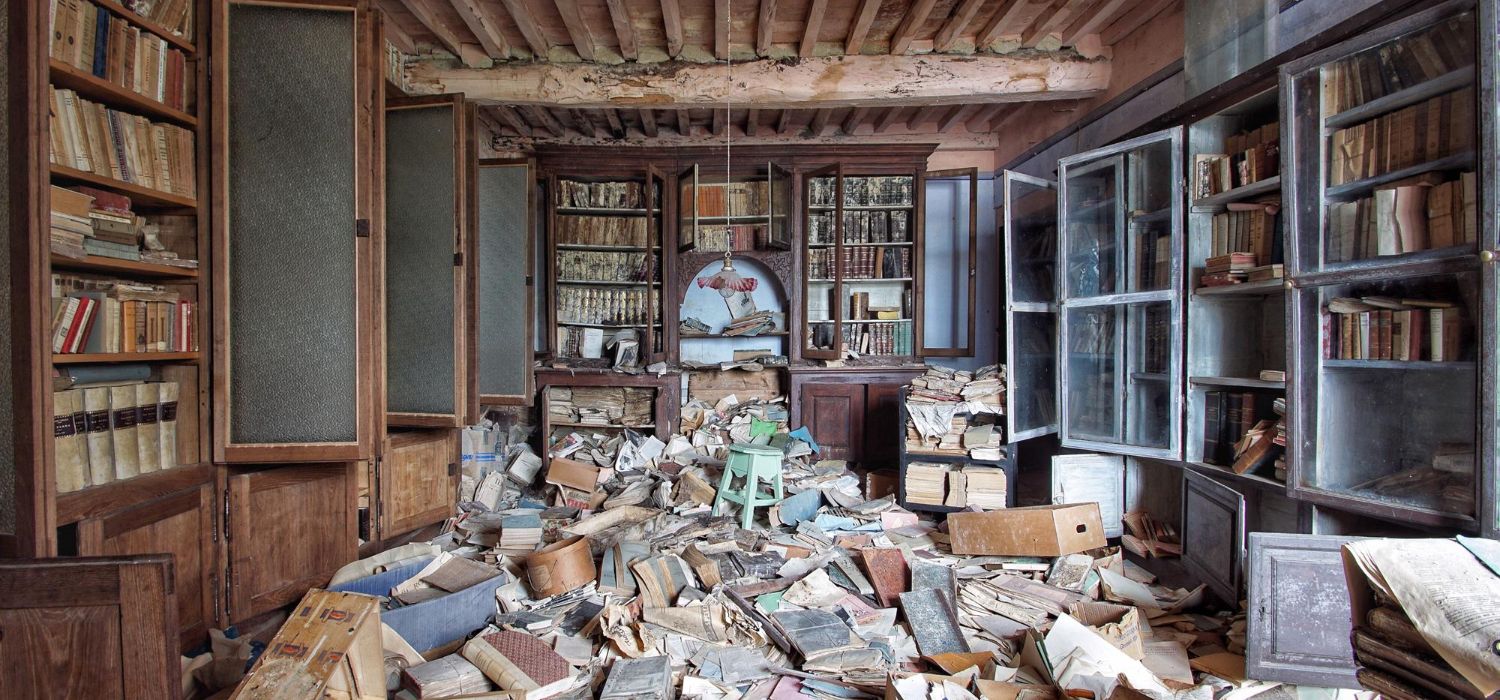
Heavily cluttered room — hoarding disorder

Severely cluttered living spaces are a hallmark of hoarding disorder.

Support and compassion for hoarders

Compassionate support is the most important first step in recovery.

Recovery and cleared home

Recovery is possible with the right help and support in place.

Signs of Hoarding Disorder

Recognising the signs of hoarding disorder can be challenging, particularly because the condition often develops gradually and the individual concerned may not acknowledge it as a problem. The following signs may indicate the presence of hoarding disorder:

  • Difficulty discarding or parting with items, even when they are broken, out of date, or of little practical use
  • Significant distress or anxiety at the thought of throwing things away
  • The accumulation of large numbers of items that clutter living spaces
  • Rooms in the home that can no longer be used for their intended purpose due to clutter
  • Inability to allow visitors into the home due to embarrassment or shame about its condition
  • Conflict with family members or neighbours about the state of the property
  • Difficulty organising possessions or making decisions about what to keep
  • A belief that items may be needed in the future, even when this is unlikely
  • Strong emotional attachments to inanimate objects
  • Excessive acquiring of free items, such as from charity shops, car boot sales, or online marketplaces

It is important to note that these signs exist on a spectrum. Someone displaying one or two of these behaviours to a mild degree is not necessarily experiencing clinical hoarding disorder. However, when multiple signs are present and they are significantly impacting daily life, it is worth seeking hoarding support from a mental health professional.

Signs of hoarding in the home

Cluttered kitchens and living spaces are common early indicators of hoarding disorder.

Why Do People Hoard?

Understanding why people hoard is essential to developing empathy and providing effective support. Hoarding is rarely about the objects themselves — it is about what those objects represent emotionally and psychologically.

💔

Grief & Loss

Many people develop hoarding behaviours following a significant bereavement or loss. Holding on to possessions can feel like a way of holding on to a loved one, a relationship, or a period of life that has been lost.

😰

Anxiety & Control

For many people with hoarding disorder, their possessions represent a sense of safety, security, and control in a world that feels unpredictable or threatening. Discarding items can trigger intense anxiety.

🧠

OCD & Perfectionism

Hoarding disorder can co-occur with obsessive-compulsive disorder (OCD). Perfectionism about the "right" decision of whether to keep or discard an item can paralyse the decision-making process entirely.

Hoarding and ADHD

Hoarding and ADHD are frequently linked. Difficulties with attention, executive function, decision-making, and organisation — all core features of ADHD — can make it very difficult to manage possessions effectively and may contribute to the development of hoarding behaviours.

🌈

Hoarding and Autism

Hoarding and autism are also closely associated. Autistic people may develop strong attachments to specific objects, experience heightened distress at change or loss, and find the sensory and cognitive demands of sorting and discarding items particularly overwhelming.

🔄

Hoarding Addiction

Some researchers describe hoarding addiction — the compulsive acquiring of new items — as a behavioural addiction similar to other impulse-control disorders. The acquisition of new items provides a temporary feeling of pleasure or relief, reinforcing the behaviour over time.

Important: Hoarding disorder is not caused by laziness, selfishness, or a lack of care for one's own home or family. It is a complex psychological condition with real neurological underpinnings. Criticising, shaming, or threatening a person with hoarding disorder rarely helps and can make the situation significantly worse.

How to Help Someone Who Hoards

If you have a family member, friend, or neighbour who you believe may be experiencing hoarding disorder, your instinct to help is admirable — but how you approach the situation matters enormously. Hoarding disorder can involve significant shame, defensiveness, and reluctance to seek or accept help. Here is some guidance on how to offer support effectively.

Approach with empathy, not judgement

Never criticise the person or their home. Phrases like "why don't you just throw things away?" or "this is disgusting" — however understandable — are deeply hurtful and counter-productive. Instead, express your concern for the person's wellbeing and safety.

Listen without agenda

Give the person space to talk about how they feel. Don't try to immediately solve the problem or convince them to take action. Simply being heard and understood can be enormously powerful for someone who has been carrying their secret in shame.

Respect their autonomy

Hoarding disorder involves a profound sense of attachment to possessions. Clearing someone's home without their consent or involvement — even with the best intentions — can be deeply traumatising and may damage trust irreparably. Always involve the person in decisions about their own belongings.

Encourage professional support

Suggest that the person speaks to their GP, a mental health professional, or contacts a hoarding support group. Be patient — it may take time for them to feel ready to take this step.

Seek support for yourself

Living with or caring for someone with hoarding disorder can be extremely stressful. It is important to look after your own mental health and to seek support if you need it. Organisations such as MIND and the Centre for Mental Health can provide guidance for carers and family members.

Supporting a loved one with hoarding disorder

Empathy and patience are the foundations of effective support for someone with hoarding disorder.

How to Start Decluttering Safely

Decluttering in the context of hoarding disorder is not simply a matter of "having a good sort out." It requires a sensitive, structured approach that keeps the individual's emotional wellbeing at the centre. Here are some principles for starting the decluttering process safely and sustainably.

1

Start Very Small

Do not attempt to tackle the whole property at once. Begin with a single shelf, a single drawer, or a single category of item. Small, achievable tasks build confidence and establish positive momentum without triggering overwhelming anxiety.

2

Work with a Trusted Person

Having a non-judgemental, patient companion — whether a trusted friend, family member, or professional — can make the decluttering process much more manageable. They can provide gentle encouragement without pressure, and help to maintain focus and energy.

3

Address Safety First

If any part of the property presents an immediate safety risk — such as blocked exits, fire hazards, or pest infestation — it is important to address these areas first. A professional hoarding clearance service can assist with this safely and sensitively.

4

Take Regular Breaks

Decluttering is emotionally exhausting as well as physically demanding. Plan regular breaks and do not push through extreme distress — this can lead to burnout and may make future sessions feel even more threatening.

5

Consider Professional Clearance

For properties where the scale of accumulation makes self-management extremely difficult, a professional hoarding clearance service — such as ours — can provide a compassionate, structured solution that gets the process moving in a safe and dignified way.

Mental Health Support for Hoarding Disorder

There are a number of effective therapeutic approaches for hoarding disorder. The most widely used and evidenced is Cognitive Behavioural Therapy (CBT), which has been specifically adapted for hoarding disorder and is sometimes called CBT-h. This approach helps individuals to understand and challenge the thoughts, beliefs, and emotions that drive hoarding behaviour, and to develop practical strategies for acquiring less and discarding more.

Other helpful approaches may include:

  • Motivational interviewing — to help individuals explore their readiness to change
  • Group therapy and hoarding support groups — providing peer support from others with lived experience
  • Medication — in some cases, antidepressants or other medications may be prescribed to address co-occurring conditions such as depression or anxiety
  • Occupational therapy — to help with practical organisation and daily living skills
  • Social care support — particularly where there are safeguarding concerns or the individual is vulnerable

The first step towards accessing mental health support is usually to speak to your GP. They can refer you to local mental health services, and can advise on what is available in your area. For more immediate support and information, the organisations on our Get Help page can provide guidance and helpline support.

Mental health therapy and counselling

CBT and other therapeutic approaches can be highly effective for hoarding disorder.

Need Practical Help Right Now?

If you or a loved one needs a hoarding clearance — or just someone to talk to about the situation — our team is here to help without judgement.

📞 0800 494 7220 Mental Health Resources

What Hoarding Really Looks Like

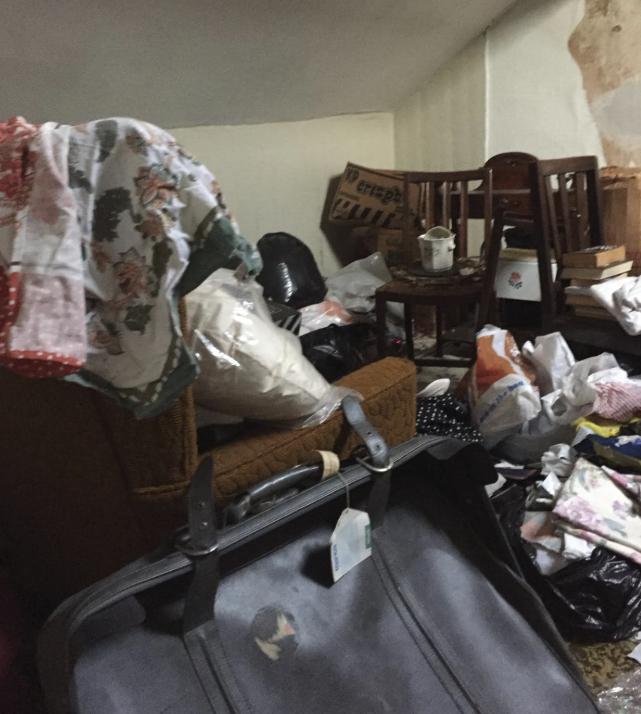
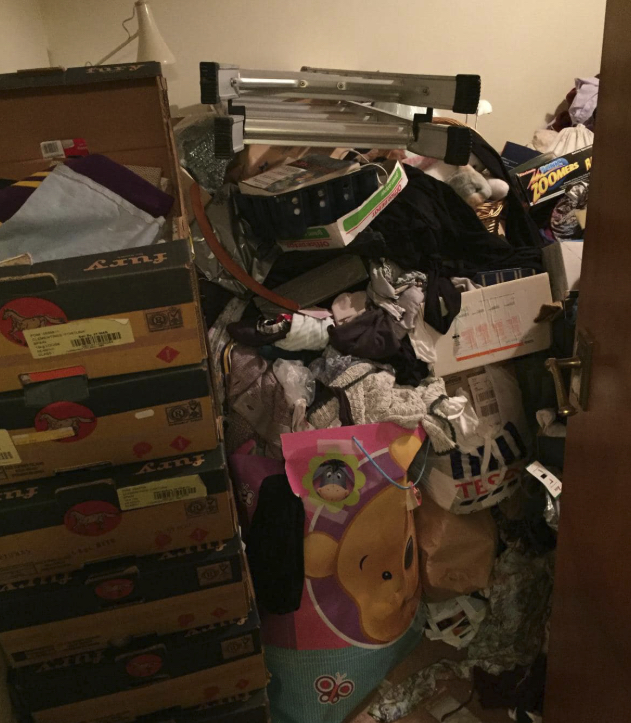
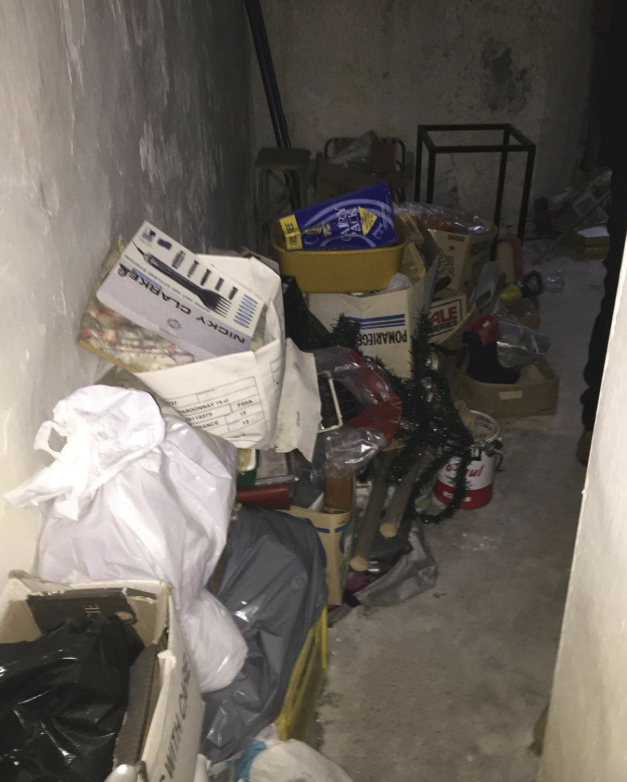
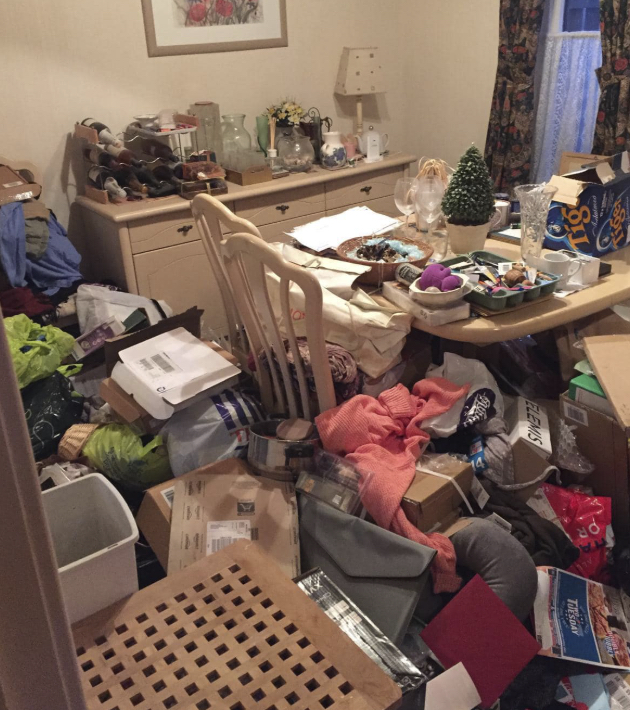
Hoarding disorder can affect any type of property. These photos — from real clearances — show the range of situations our team encounters. Behind every one is a person who needs help, not judgement.

Room stacked floor to ceiling with boxes

Items stacked to the ceiling — a common feature of severe hoarding.

Room filled with luggage, bags and old furniture

Furniture, luggage and bags making rooms inaccessible.

Bedroom doorway completely blocked with stacked boxes

A doorway blocked — rooms rendered unusable.

Narrow corridor blocked with bags and stored items

Corridors blocked — fire safety becomes a serious concern.

Dining room covered in accumulated items and packaging

Every surface in a dining room covered in years of accumulation.

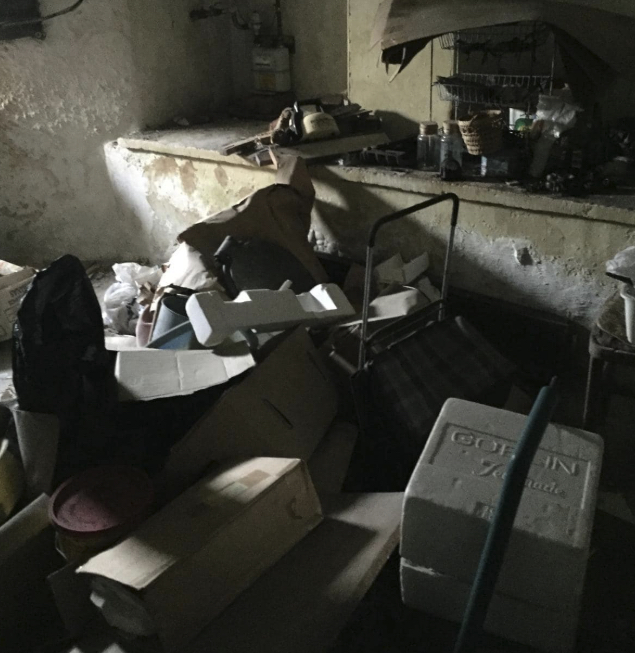
Dark room packed with boxes and old equipment

Spaces that were once functional, now completely unusable.